

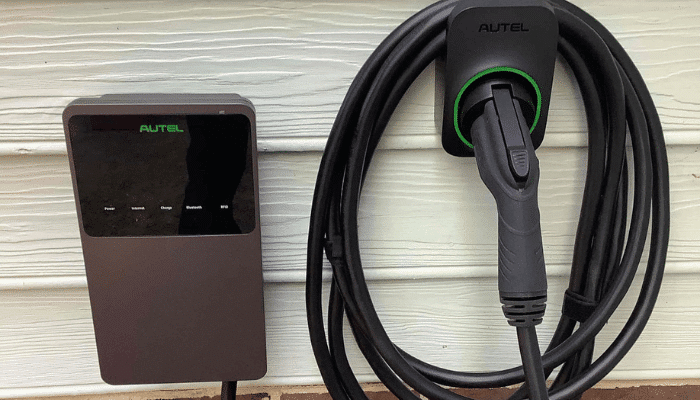
One of the most common questions we hear from EV owners is also one of the most important: can my home's electrical panel actually handle a charger?
At Dawson's Electric & Air, we install EV chargers throughout the Triangle, and the answer genuinely varies from house to house. Many newer homes in the area can support a Level 2 charger without major modifications — especially homes with gas appliances or gas heat, which reduces overall electrical demand. But in older homes throughout the Triangle — many of which still run on 100-amp electrical service — the answer takes a closer look. Here's how to know where your home stands, and what your options are if your panel needs help.
It Starts with a Load Calculation
Before installing an EV charger, a licensed electrician should perform an electrical load calculation — a detailed evaluation of your home's current electrical usage. It accounts for your major appliances, heating and cooling system, water heater, electric range, lighting, smart home devices, and every other load on your system.
By analyzing total demand, the electrician can determine how much electricity your home currently uses, how much available capacity remains in your panel, whether an EV charger can be added safely, and whether a panel upgrade may be necessary first.
This step is essential for both safety and code compliance. A Level 2 charger requires a dedicated 240-volt circuit and adds a substantial, sustained electrical load. Installing one without evaluating your system can lead to overloaded circuits, tripped breakers, or costly corrections later. A load calculation is the only way to know for sure — not a guess based on the age of your home or the size of your panel.
100-Amp vs. 200-Amp Service: What It Means for EV Charging
In many cases, newer homes with 200-amp electrical service can accommodate a Level 2 EV charger without major modifications. Older homes with 100-amp service are a different story — not because a charger is impossible, but because there's simply less headroom to work with, especially in all-electric homes.
An electrical panel upgrade may be necessary if:
- Your existing panel is already near capacity
- You have an older 100-amp electrical service
- There's no available breaker space for a dedicated circuit
- Your load calculation indicates insufficient capacity
- You plan to add other high-demand equipment in the future, such as a second EV charger, a backup generator, or a solar system
A Full Panel Replacement Isn't Always the Answer
Here's something many homeowners don't realize: even if your panel can't support a charger as-is, a full panel replacement isn't always the only solution. Depending on your home's electrical system, your electrician may recommend electrical upgrades such as:
- A subpanel: adds breaker space without replacing your main panel
- A load management device: automatically pauses EV charging when other major appliances are running, so the charger fits within your existing capacity
- Smart panel technology: monitors and manages your home's loads in real time
At Dawson's, we evaluate the whole system before recommending anything. After performing the load calculation, we'll walk you through the safest and most cost-effective option for your home — and if a smaller fix will do the job, that's what we'll tell you.
That said, when a panel genuinely can't support the additional demand, upgrading to a larger electrical service is often the best long-term investment. It prepares your home not just for EV charging, but for future needs like backup generators, electric appliances, and additional chargers down the road.
What Does a Panel Upgrade Cost?
When a panel upgrade is required, the project involves additional equipment, labor, permitting, and inspections, so costs increase compared to a standard charger installation. The total depends on your home's electrical system and the scope of the upgrade, which is why we don't quote panel upgrades sight unseen.
The only way to know what your home needs is a load calculation and panel evaluation by a licensed electrician. For current pricing on panel upgrades and other common electrical services, you can review our Electrical Pricing Guide or schedule an estimate for a quote tailored to your home. Financing options are available if an upgrade is in your future.
Duke Energy Can Help Pay for It: The Charger Prep Credit
If you're a Duke Energy customer in North Carolina, there's meaningful help available. Duke Energy's Charger Prep Credit program provides a one-time credit of up to $1,133 per household toward qualifying electrical work needed to support a Level 2 or higher EV charger.
The credit is designed specifically to offset the cost of preparing your home's electrical system, which is exactly where panel-related costs live. Eligible expenses can include new wiring, conduit, outlets, breakers, a dedicated 240-volt circuit, and electrical panel upgrades. Note that the credit covers the electrical preparation work, not the charger hardware itself.
A licensed electrician can evaluate your panel, determine whether upgrades are needed, and help ensure your installation meets local code requirements while maximizing the incentives available to you.
Not Sure Where Your Home Stands?
Whether you're in an older home in Garner or Clayton or a newer build in Fuquay-Varina, the path to EV charging starts the same way: a professional evaluation of your electrical system. Dawson's Electric & Air serves the surrounding Triangle communities.
Call us at 919-887-8284 or contact us online to schedule a load calculation and find out exactly what your home needs — and what it doesn't.
FAQs About Panel Upgrades for EV Chargers
Not always. Many newer homes with 200-amp service can support a Level 2 charger without major modifications. Older homes with 100-amp service, or homes near full electrical capacity, may require a panel upgrade to safely handle the new load. A professional load calculation is the only way to know for sure.
Sometimes — it depends on what else your home demands. Homes with gas heat and gas appliances have more available capacity than all-electric homes. A load calculation will show whether your 100-amp service has the headroom, and if not, options like a load management device may make charging possible without a full service upgrade.
Depending on your system, a subpanel, a load management device, or smart panel technology can create the capacity needed for EV charging at a lower cost than a full service upgrade. Your electrician can recommend the right option after evaluating your panel.
Yes. The credit — up to $1,133 per household for North Carolina residential customers — applies to qualifying electrical preparation work, which can include wiring, outlets, breakers, dedicated circuits, and electrical panel upgrades. It does not cover the charger hardware itself.
Often, yes. A larger electrical service prepares your home for future needs like a backup generator, electric appliances, solar, or a second EV charger — so the investment keeps paying off after the charger is installed.