

Expert EV Home Charger Installation For Your Raleigh Electric Vehicle
Switching to an electric vehicle is exciting, but you need a reliable way to keep it charged and ready - and there's not always an easy way to do so. But an EV home charger gives you total control. Dawson's Electric & Air installs home EV chargers that make powering up your car as simple as plugging in your phone overnight—no more trips to public charging stations.
Ready to install your home EV charger? Call us at 919-887-8284 or message us online to schedule your consultation today.
What's The Difference Between Level 1 & Level 2 EV Chargers?
When you buy an electric vehicle, understanding your charging options helps you figure out what makes sense for your home and driving habits. The two main types of home chargers work very differently in terms of speed and installation requirements.
- Level 1 Uses Standard Outlets: Level 1 chargers plug into regular 120-volt household outlets—the same ones you use for lamps and appliances. Most EVs come with a Level 1 charging cable, so there's no additional equipment to buy.
- Level 1 Charges Slowly: You'll get about 4-5 miles of range per hour of charging with Level 1. If you drive less than 40 miles daily and can charge overnight, this might work fine for your needs.
- Level 2 Requires 240-Volt Power: Level 2 chargers operate on 240-volt circuits, similar to your electric dryer or oven. They require professional installation and a dedicated circuit with proper amperage to function safely and efficiently.
- Level 2 Charges Much Faster: With Level 2 charging, you'll add 25-40 miles of range per hour, depending on your vehicle and charger specifications. Most EVs can fully charge overnight, usually in 3-8 hours from empty.
- Level 2 Works For Most Drivers: If you have a longer commute, drive multiple times daily, or want the flexibility to charge quickly, Level 2 is the better choice. It's the standard for home installations across the country.
- We'll Help You Choose: During your consultation, we'll discuss your driving habits, vehicle requirements, and electrical setup to recommend the right charger for your situation. You'll get exactly what you need without paying for features you won't use.
Do I Need To Upgrade My Electrical Panel To Install An EV Charger?
Whether you need a panel upgrade depends on your current electrical capacity and the type of charger you're installing. We'll evaluate your home's system and let you know exactly what's required before any work begins.
- Check Your Current Panel Capacity: Most modern homes have 200-amp service, which typically handles a Level 2 EV charger without issues. Older homes with 100-amp panels might be near capacity already and could need an upgrade to safely accommodate the additional load.
- Level 2 Needs Dedicated Power: A Level 2 charger requires a dedicated 40-60 amp circuit. If your panel is already maxed out or doesn't have room for additional breakers, you'll need either a panel upgrade or a subpanel to create the necessary capacity.
- We Calculate Your Electrical Load: We'll assess all your major appliances, HVAC systems, and other electrical demands to determine whether your current panel can handle an EV charger. This load calculation shows us exactly where you stand before making any recommendations.
- Alternatives To Full Upgrades Exist: If your panel is close to capacity, we can explore options like load-sharing devices, smart panels, or subpanels. These solutions often cost less than a complete panel upgrade while still giving you the charging capability you need.
- Future-Proofing Makes Sense: If you're borderline on capacity now, upgrading to 200-amp service prepares your home for future additions like solar panels, additional EVs, or other high-demand appliances. It's often worth doing it right the first time.
- We'll Give You Honest Recommendations: Our job is to find the safest, most cost-effective solution for your situation. We'll explain all your options clearly so you can make an informed decision about what works best for your home and budget.
Tired of driving around looking for a charging station? Make those scavenger hunts a thing of the past - call the team at Dawson's Electric & Air at 919-887-8284 today!
EV Home Charger FAQs
Installation costs vary based on the charger you choose, how far it is from your electrical panel, and whether any electrical upgrades are needed. A straightforward Level 2 installation typically costs less than one requiring panel upgrades or extensive wiring. We provide upfront, flat-rate pricing after evaluating your specific situation, so you'll know exactly what to expect before we start work.
No, EV charger installation should always be handled by a licensed electrician. It requires running dedicated 240-volt circuits, proper breaker sizing, permits, and inspections to meet local codes. Mistakes can create serious safety hazards and void your charger's warranty. Let us handle the installation correctly from the start—you'll have peace of mind knowing it's done right.
Yes, there are often federal tax credits, state incentives, and utility company rebates available for EV charger installations. The federal tax credit can cover up to $1,000 for residential charger installation. We can point you toward available programs in North Carolina, but you'll want to check current eligibility and requirements since these incentives change over time.
Installing an EV charger with Dawson’s is simple and stress-free. Here’s how it works:
- Consultation: We start by discussing your needs and the best charger options for your home.
- Load Calculation: Our licensed electricians check your panel to make sure it can handle the extra voltage safely.
- On-Site Estimate: We provide a clear, personalized price for your installation.
- Permits: We handle any required permit fees and paperwork so you don’t have to worry.
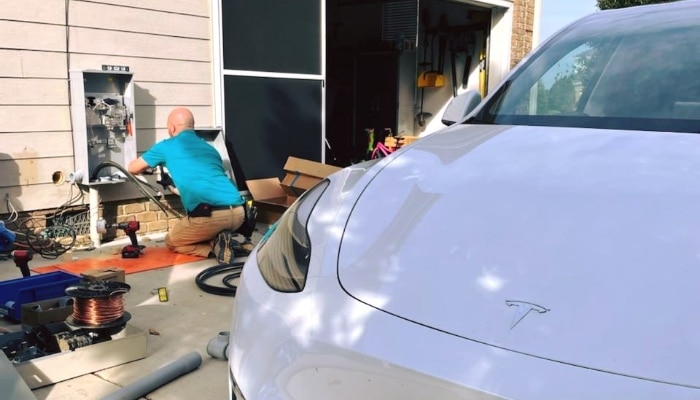
- Installation: Our electricians install your charger quickly and professionally.
- Inspection: Local authorities inspect the work to ensure everything is safe and up to code.
- Rebate Assistance:We help you apply for any available rebates, like those through Duke Energy.
From start to finish, we make sure your EV charger is installed safely, correctly, and with as little hassle for you as possible.
Where Should I Install My EV Charger?
Choosing the right location for your EV charger involves thinking about convenience, electrical access, and practical considerations. The goal is a setup that makes charging effortless while keeping installation costs reasonable.
- Garages Are Most Common: Most homeowners install chargers in their garage, where the car is protected from the weather, and the charger is close to the electrical panel. This usually keeps installation costs down since less wiring is needed.
- Driveway Installations Work Too: If you don't have a garage or prefer outdoor parking, we can install your charger on an exterior wall near where you park. The charger needs to be weather-rated and properly protected from the elements.
- Cable Length Matters: EV charger cables typically range from 18-25 feet. Measure from where you'll mount the charger to where your vehicle's charging port will be when parked—you want enough reach without excess cable lying around.
- Distance From Panel Affects Cost: The farther your charger location is from your electrical panel, the more wiring we'll need to run. Choosing a spot closer to the panel can help keep your installation costs down.
- Consider Future Needs: Think about whether you might add a second EV down the road or if visitors with electric vehicles might need to charge. Planning for these possibilities now can save you from having to modify your setup later.
- Permits & Code Requirements: Your charger installation must meet local building codes and typically requires permits and inspections. We handle all of that for you, ensuring everything is done properly and safely from start to finish.
How Long Does It Take To Charge An Electric Vehicle At Home?
Charging time depends on your vehicle's battery size, how depleted it is, and what type of charger you're using. Understanding these factors helps you plan your charging routine and know what to expect.
- Level 1 Takes All Night: With a standard 120-volt outlet, expect 11-20 hours to fully charge a depleted battery. If you're just topping off after short trips, overnight charging might be enough for your daily needs.
- Level 2 Charges Overnight: Most electric vehicles fully charge in 3-8 hours with a Level 2 charger. If you plug in when you get home from work, your car will be ready to go by morning with a full charge.
- Battery Size Makes A Difference: Larger battery packs take longer to charge than smaller ones. A compact EV with a 40 kWh battery charges faster than a long-range model with an 80+ kWh battery, even with the same charger.
- You Rarely Charge From Empty: Most EV owners charge their vehicles when they're partially depleted, not completely empty. This means your actual charging time is usually shorter than the maximum time it takes for a full charge.
- Charger Amperage Affects Speed: Higher-amperage Level 2 chargers deliver more power and charge faster. A 48-amp charger adds range more quickly than a 32-amp unit, though your vehicle's onboard charger also limits how fast it can accept power.
- Smart Charging Saves Money: Many Level 2 chargers let you schedule charging during off-peak hours when electricity rates are lower. Your car still charges fully overnight, but you're paying less for the power you use.
Get Your Home Ready For Electric Vehicle Charging
Installing an EV charger in Fuquay-Varina, Apex, Cary, Garner, or anywhere in between gives you the convenience and reliability you need to make the most of your electric vehicle. Whether you need a simple installation or electrical upgrades to support your new charger, we're here to help.
Call us at 919-887-8284 or reach out online to schedule your EV charger installation consultation today.