

Generator Installation & Repair In The Triangle
When the power goes out, you shouldn't have to sit in the dark wondering when it'll come back on. Dawson's Electric & Air installs and services generators that keep your home running smoothly through storms, outages, and whatever else comes your way.
Ready to install a backup generator at your home?
Call us at 919-887-8284 or message us online to schedule your electrical service consultation today.
Nearby Generator Service Areas in Harnett, Johnson and Wake County
What Kind Of Generators Do We Install?
Whole-Home Generators
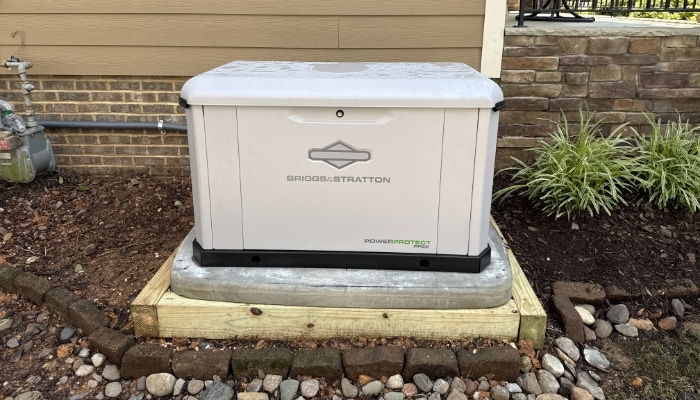
Whole-home generators are permanently installed outside your home and automatically kick on when the power goes out. They run on natural gas or propane, powering your entire house without you lifting a finger. These systems give you complete peace of mind during extended outages.
Portable Generators
Portable generators offer a more affordable backup power option that you can move and store as needed. They're perfect for powering essential items like your refrigerator, sump pump, and a few lights during shorter outages. We can install transfer switches to make using your portable generator safer and easier.
What's The Difference Between A Whole Home Generator & A Portable Generator?
Understanding the key differences between these two types of generators helps you figure out which one makes sense for your home, budget, and how you plan to use backup power during outages.
Installation & Permanence: Whole-home generators are permanently installed on a concrete pad outside your home and hardwired to your electrical system. Portable generators are smaller units you can move around and store when not in use.
Automatic Vs. Manual Operation: Whole-home generators sense power outages and start automatically within seconds, requiring no action from you. Portable generators need to be manually started, positioned outside, and connected each time you use them.
Power Capacity: Whole-home generators can power your entire house, including HVAC systems, appliances, and all lights. Portable generators power selected essential items but can't handle your whole home's electrical load at once.
Fuel Source: Whole-home generators connect to your natural gas line or a propane tank for a continuous fuel supply. Portable generators run on gasoline, which means you need to keep fuel on hand and refill the tank periodically.
Cost Difference: Whole-home generators require a significant upfront investment for the unit and professional installation. Portable generators cost much less initially, but you'll still want a transfer switch installed for safe, convenient operation.
Maintenance Requirements: Both need regular maintenance, but whole-home generators should be professionally serviced annually. Portable generators require basic upkeep you can handle yourself, plus fuel stabilizer when storing them between uses.
Want to learn more about the differences between portable and whole-home generators? Give us a call at 919-887-8284 anytime!
What Size Generator Do I Need For My Home Near Raleigh?
Choosing the right generator size ensures you have enough power for what matters most without overpaying for capacity you won't use. The size you need depends on what you want to keep running during an outage.
Calculate Your Essential Loads: Make a list of what you absolutely need during a power outage—refrigerator, freezer, some lights, maybe a sump pump or medical equipment. Add up the running watts for each item to get your baseline power requirement.
Account For Starting Watts: Appliances with motors need extra power to start up before settling into their running wattage. Your AC, refrigerator, and sump pump all draw more power when they first kick on, so factor in these surge requirements.
Consider Home Size: Most homes under 2,000 square feet need a 15-20 kW whole-home generator for full coverage. Larger homes or those with multiple HVAC systems might need 22-26 kW or more to handle the electrical load comfortably.
Decide What's Essential: You don't necessarily need to power everything at once. Many homeowners choose generators sized to run essentials plus one or two comfort items, which costs less than a unit that powers the entire house simultaneously.
Future-Proof Your Investment: Think about potential additions like a home office, workshop, or additional appliances. Sizing up slightly now can save you from needing a bigger generator later if your power needs increase over the next few years.
We'll Size It For You: During your consultation, we'll walk through your home's electrical demands and recommend the appropriately sized generator. You'll get exactly what you need without paying for unnecessary capacity or coming up short when you need power most.
A generator can make all the difference for you during a storm. Call us at 919-887-8284 to schedule your installation!
Generator FAQs
Whole-home generator installations typically range from $8,000-$15,000 including the unit, transfer switch, concrete pad, fuel connections, and labor. Portable generators cost less upfront, usually $500-$2,000 for the unit plus $300-$1,200 for transfer switch installation. The final cost depends on generator size, installation complexity, and any necessary electrical work. We provide upfront pricing after evaluating your specific situation.
Yes, generator installations require permits and inspections to ensure they meet local electrical and building codes. This includes electrical permits for the transfer switch installation and potentially gas permits if connecting to your natural gas line. We handle all permitting and coordinate required inspections, so you don't have to worry about navigating the approval process yourself.
Whole-home generators should be professionally serviced annually, which includes oil changes, filter replacements, battery checks, and system testing. Portable generators need similar maintenance after every 100 hours of use or annually, whichever comes first. Regular maintenance keeps your generator ready when you need it and helps prevent breakdowns during critical moments.
There are several reliable generator brands on the market, but the most important factor is how it’s installed, sized, and maintained. A properly installed generator that’s matched to your home’s electrical needs will perform far better, and last longer, than one that’s simply “top-rated” on paper.
At Dawson’s, our licensed electricians install whole-home generators from trusted brands known for quality and reliability. We’ll help you choose the best option for your home and make sure it’s installed safely and up to code, so you can count on power when you need it most.
How Does A Whole-Home Generator Work?
Whole-home generators provide seamless backup power by automatically detecting outages and switching your home to generator power. Understanding the process helps you appreciate how reliable this system is when you need it most.
Continuous Monitoring: The automatic transfer switch constantly monitors incoming power from the utility grid. The moment it detects a loss of power, it signals the generator to start—usually within seconds of the outage beginning.
Automatic Startup: The generator's engine starts on its own using battery power, running on natural gas or propane from your fuel line. You don't need to go outside, flip switches, or do anything manually, even if you're not home.
Power Transfer: Once the generator reaches proper operating speed and voltage levels, the transfer switch safely disconnects your home from the utility grid and connects it to the generator, restoring power throughout your house.
Continuous Operation: The generator runs as long as the outage lasts, automatically managing its performance and fuel consumption. Your home stays powered just as if the utility power never went out, keeping everything running smoothly.
Automatic Shutdown: When utility power returns, the transfer switch detects this and safely switches your home back to grid power. The generator continues running briefly to cool down, then shuts off automatically and resets itself.
Weekly Self-Testing: Most whole-home generators run a brief self-test once a week to ensure they're ready when needed. This automatic exercise keeps the engine components lubricated and alerts you if any maintenance issues develop.
Sounds amazing, doesn't it? If you're ready to bring one to your home, give us a call at 919-887-8284 !
Where Should My Generator Be Installed?
Generator placement affects performance, safety, and code compliance. Choosing the right location involves thinking about several practical factors while meeting local requirements that keep everyone safe.
Distance From Your Home: Generators must be installed at least 5-10 feet from your house, windows, doors, and fresh air intakes. This spacing prevents carbon monoxide from entering your home and provides adequate ventilation for the unit to operate safely.
Level, Stable Surface: Whole-home generators require a concrete pad for stable, level installation. The pad needs proper drainage and should be positioned where it won't shift or settle over time, ensuring the generator operates correctly.
Fuel Line Access: For natural gas generators, proximity to your existing gas line keeps installation costs reasonable. If you're using propane, you'll need space for a tank large enough to provide an adequate fuel supply during extended outages.
Electrical Panel Proximity: The closer your generator is to your electrical panel, the less wiring we need to run. This affects both installation cost and the complexity of the project, though safety and code requirements come first.
Noise Considerations: While modern generators are quieter than older models, they still make noise when running. Consider placement that minimizes disturbance to neighbors and your own living spaces, especially bedrooms, while maintaining required clearances.
HOA & Code Requirements: Your installation must meet local building codes, HOA restrictions, and utility company requirements. We handle all permits and ensure your generator is positioned correctly and safely from the start, so you won't have compliance issues down the road.
Keep Your Raleigh Home Powered Through Any Outage
Whether you need a whole-home generator for complete peace of mind or a portable unit with a transfer switch for essential backup power, we're here to help.
Call us at 919-887-8284 or reach out online to schedule your generator consultation today.