

What Are the Warning Signs of an Electrical Fire? (7 Things to Check)
Your home’s electrical system powers your daily life, but when components begin to fail, they can pose a serious safety risk. At Dawson’s Electric & Air, we’ve helped homeowners across the Triangle, stay safe by identifying potential hazards early.
Electrical fires are often preventable, but only if you know what to look for before a minor issue becomes a major hazard. Whether it’s a faint burning smell or lights that seem to flicker without explanation, recognizing the early warning signs is the first step in protecting your home and family.
In this guide, we’ll walk you through the seven critical signs of an electrical fire that every homeowner should be able to identify, and explain exactly when it’s time to call in a professional.
1. Persistent Burning or Fishy Odors
One of the earliest and most distinct warning signs of an electrical issue is a strange odor coming from your outlets, switches, or appliances. Homeowners in the Raleigh area often describe this as a sharp, burning plastic smell or, surprisingly, a fishy odor. This occurs when the plastic insulation surrounding electrical wires begins to overheat and melt.
If you detect these smells, do not ignore them. It is a critical warning that your wiring is under extreme stress and potentially on the verge of igniting. This is an immediate safety hazard that requires professional attention from a licensed electrician to locate the source of the heat and prevent a fire before it starts.
2. Frequent Circuit Breaker Trips
A circuit breaker’s primary job is to protect your home from fire by cutting power when it detects an electrical issue. If your breakers trip frequently, it is not just an inconvenience, it is a warning sign that your system is under stress.
Common reasons your breakers may trip include:
- Overloaded Circuits: Plugging too many high-power appliances into a single circuit.
- Short Circuits: Often caused by faulty wiring or loose connections, requiring immediate attention.
- Ground Faults: A dangerous condition where electricity escapes the intended path.
If you find yourself resetting breakers or replacing fuses regularly, do not ignore it. It indicates a deeper electrical problem that could escalate into a fire hazard. We recommend having a licensed electrician in the Triangle area inspect your panel to identify if the issue is a simple overload or a more dangerous wiring defect.
3. Discolored or Warm Outlet
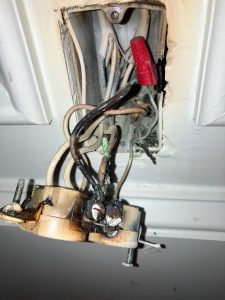
An electrical outlet should never feel hot to the touch, nor should it show visible signs of charring, melting, or discoloration. If you notice a warm outlet or dark stains around the slots, you are likely witnessing heat buildup caused by dangerous electrical arcing or an overloaded circuit.
- Why it happens: Heat at an outlet is usually a sign that the wiring behind the wall has become loose. As the electrical current tries to jump across these loose connections, it creates “arcing”, intense heat that can melt the plastic faceplate and eventually start a fire in the drywall or insulation.
- The risk: Discoloration is not just cosmetic, but is also a sign of internal degradation. A warm or charred outlet is an immediate fire hazard that can escalate quickly if ignored.
If you find a warm or discolored outlet, unplug any devices connected to it immediately and do not use the outlet again. This is not a DIY project, the wiring needs to be inspected by a professional electrician to ensure proper connection. If you are located in Raleigh, Cary, or anywhere in the Triangle area, contact our team at Dawson’s Electric & Air. We can quickly diagnose whether the issue is a simple outlet failure or a more complex wiring defect and perform the necessary repairs to keep your home safe.
4. Sizzling or Buzzing Sounds
If you hear a persistent sizzling, popping, or buzzing sound coming from your walls or outlets, it is a significant warning sign that you have loose electrical connections or faulty wiring. These sounds are often the audible result of electrical "arcing", where electricity jumps across a gap in a connection because the contact isn't solid.
Over time, connections in your electrical terminals can loosen due to normal thermal expansion and contraction, or poor installation. When the connection is loose, the current can't flow smoothly, creating tiny electrical sparks or "arcs" that create the signature buzzing sound.
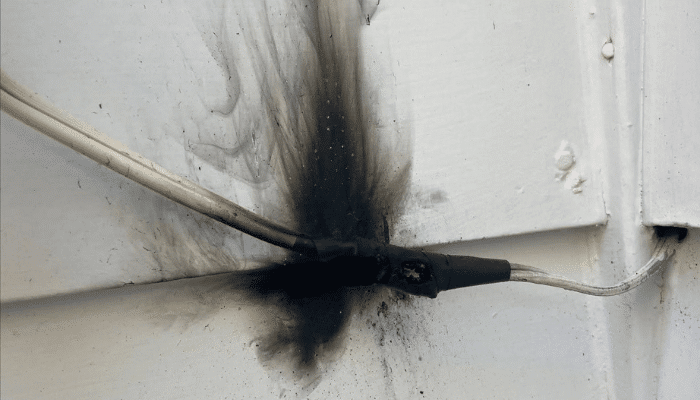
This is not just annoying, it’s a fire hazard. Those tiny arcs generate immense, concentrated heat that can melt wire insulation, damage your electrical panel, or ignite nearby dust and insulation inside your walls.
If you hear buzzing, do not attempt to tighten the connection yourself. A licensed electrician needs to inspect the specific junction or outlet to ensure the wiring is properly secured and the terminal is not compromised. If you are hearing these sounds in your home, contact your local electrician immediately, this is a warning sign that should never be ignored.
5. Flickering or Dimming Lights
While sometimes as simple as a loose bulb, persistent flickering or dimming often points to a deeper issue like a loose neutral connection at your electrical panel or within the circuit itself. This creates voltage fluctuations that can damage sensitive electronics and appliances.
Flickering is a visible sign of electrical instability. When a connection is loose, the flow of electricity becomes interrupted, leading to potential arcing and excessive heat buildup behind your walls. If left unaddressed, these fluctuations can turn into an electrical failure or fire.
If your lights continue to flicker after you've tightened the bulbs, do not wait for the problem to worsen. We recommend a professional inspection of your panel and circuit wiring to identify and secure any loose connections.
6. Sparking Outlets or Appliances
While a tiny spark when plugging in a device is sometimes normal, persistent or large sparks, especially those that are blue or white, are a major red flag. These sparks indicate a short circuit or severely worn electrical contacts that are no longer making a safe connection.
Worn-out outlets or damaged appliance cords can allow electricity to jump through the air to reach a ground or another wire. This arcing generates intense heat instantly.
Sparking is an active fire hazard. Every spark has the potential to ignite nearby combustible materials, such as dust, insulation, or the plastic components of the outlet itself.
If you witness persistent sparking, stop using that outlet or appliance immediately. Unplug the device if it is safe to do so, and call a professional electrician to replace the damaged components before they cause a fire.
7. Outdated Electrical Panels (The “Hidden” Hazard)
We’ve seen a pattern of outdated electrical panels in older subdivisions such as Bentwoods in Fuquay-Varina. Because many of these homes were built between 1950 and 1990, the wiring and panel standards often struggle to handle the electrical load of modern appliances and smart home devices. An electrical panel inspection is the only way to ensure your home meets modern breaker panel safety standards.
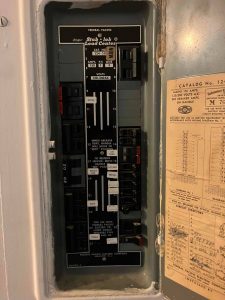
Two legacy brands, Federal Pacific Electric (FPE) and Zinsco, are widely recognized as electrical fire hazards that should be evaluated immediately:
- Federal Pacific Electric (FPE) Stab-Lok: These panels were common for decades, but independent research indicates that roughly 1 in 4 Stab-Lok breakers fail to trip during an overload. Instead of cutting power, they can overheat, contributing to thousands of house fires annually.
- How to identify: Look for labels saying "Federal Pacific," "FPE," or "Stab-Lok" and distinctive red or orange switch faces.
- Zinsco (GTE-Sylvania): These panels often have a critical design flaw where breakers can melt or fuse onto the bus bar, rendering them permanently unable to trip.
- How to identify: Check for labels reading "Zinsco," "Sylvania," or "GTE-Sylvania" on the panel door, or look for bright red, blue, or green breaker tabs.
These panels are not simply "old", they are compromised. If you find these brands in your home, schedule a professional electrical inspection immediately. We can help you determine if an upgrade is necessary to avoid electrical fires and keep your home safe.
Hidden Hazards: Crawl Space & Attic Junction Boxes
Not all electrical hazards are visible in your living areas. Some of the most dangerous electrical issues occur in the places we rarely visit, like your crawl space or attic.
- Why it happens: Junction boxes in these areas are often exposed to environmental stressors like humidity, temperature swings, and vibration from nearby equipment, which can loosen connections over time. Once a connection becomes loose, resistance builds, causing the wiring to overheat.
- The Risk: Because these areas are "out of sight, out of mind," these issues often go unnoticed until a catastrophic failure occurs. We recently helped a homeowner in Fuquay-Varina near Harnett Central High School, dealing with a partial power loss and a sharp burning smell. The source was an overheated junction box in their crawl space. The heat had become so intense that it compromised the circuit, causing a surge that destroyed their HVAC condensate pump and required an emergency response from both the fire department and the power company.
- The Professional Intervention: If you experience "mystery" power surges, partial power loss in specific rooms, or catch a burning smell coming from your vents or floor registers, don't assume it’s just the HVAC system. Have a licensed electrician perform a safety evaluation of your accessible crawl space or attic junction boxes. If your home is over 20 years old, these hidden connection points are often the first place we look for electrical degradation.
Don’t Wait for a Warning to Become an Emergency
Electrical safety is not about living in fear; it’s about knowing your home and recognizing when your electrical system is trying to tell you something. From flickering lights to the smell of fish or burning plastic, your home often provides early warning signs long before a serious incident occurs. Ignoring these signs doesn’t just put your property at risk, it puts your family’s safety on the line.
If you’ve noticed any of the symptoms discussed in this safety guide, or if you’re considered that your home’s electrical system may be outdated, the safest step is to have a professional safety inspection.
At Dawson’s Electric & Air, we’ve been helping homeowners across the Raleigh area stay safe for over 20 years. Schedule your electrical safety inspection today and get the peace of mind that comes with a home you can trust.