

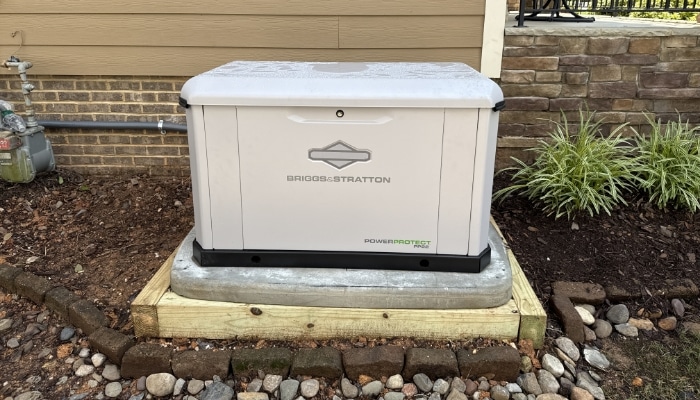
When the power goes out in North Carolina, most homeowners want the same three things: keep their family safe, stay comfortable, and stay connected. Hurricanes, severe thunderstorms, and winter ice storms regularly cause outages across Fuquay-Varina, Apex, Holly Springs, and the greater Triangle area. The real question is which backup power solution fits your home best.
Quick Answer:
A portable generator is a solid choice for occasional, short outages and powering a few essential circuits. A whole home standby generator is the better solution if you want automatic, whole-house protection, especially if you work from home, have medical equipment, or experience frequent or extended outages.
At Dawson’s Electric and Air, we help homeowners throughout the Triangle understand the real differences so they can choose the right system for their needs , not just the most expensive one.
What Is a Portable Generator?
A portable generator is a temporary power source that runs on gasoline, propane, or dual fuel. During an outage you must move it outdoors, start it manually, refuel it, and connect it safely to selected appliances or circuits.
Best for homeowners who:
- Experience infrequent outages
- Only need to power essentials (refrigerator, lights, phone chargers, maybe a window unit)
- Prefer a lower upfront cost
- Also use the generator for camping, RVs, or job sites
Portable generators require more hands-on effort and strict safety practices.
What Is a Whole Home Standby Generator?
A whole home (standby) generator is permanently installed outside your house and connected to your electrical system through an automatic transfer switch. When utility power fails, the generator starts within seconds and supplies electricity to the circuits you have designated. When grid power returns, it shuts down automatically.
Best for homeowners who:
- Want fully automatic backup power
- Experience frequent or multi-day outages
- Work from home or rely on internet
- Have medical equipment, a sump pump, well water, or a finished basement
- Want their HVAC system to keep running
- Travel and still want the house protected
Because the system is automatic, you do nothing when the power fails.
Portable Generator vs. Whole Home Generator: Side-by-Side Comparison
| Feature | Portable Generator | Whole Home Generator |
|---|---|---|
| Starts Automatically | No | Yes |
| Powers Entire Home | Usually No | Yes (if properly sized) |
| Requires Manual Setup | Yes | No |
| Fuel | Gasoline, Propane, Dual Fuel | Natural Gas or Propane |
| Safe Home Connection | Requires proper equipment | Permanent automatic transfer switch |
| Best For | Short outages and limited power needs | Frequent outages and whole-home protection |
Neither option is automatically better. The right choice depends on how often you lose power, which loads matter most, and how much convenience you want.
Can a Portable Generator Run My Air Conditioner?
Sometimes — but often not comfortably.
Many portable generators can handle a window air conditioner or a smaller central system. Larger HVAC units frequently draw more power than a typical portable unit can safely supply. Running the air conditioner also leaves little capacity for refrigerators, lighting, medical devices, or other essentials.
If keeping heating and cooling running is a top priority during outages, a whole home standby generator is almost always the more practical solution.
Which Generator Is Best for Your Home? Decision Guide
Choose a portable generator if you:
- Lose power only occasionally
- Mainly need to keep a refrigerator, a few lights, and phone chargers running
- Are comfortable setting the generator up and refueling it yourself
- Have a tighter budget
Choose a whole home standby generator if you:
- Experience frequent or extended outages
- Want your HVAC system to continue operating
- Work remotely and need reliable internet and power
- Have a sump pump, well pump, or medical equipment
- Want protection even when you are away from home
- Prefer zero manual effort during an outage
The best generator is not the biggest one; it is the one correctly matched to your home’s actual electrical needs.
Generator Safety: What Every Homeowner Must Know
Safety is non-negotiable with either option.
Portable generator rules:
- Never run one inside a home, garage, crawl space, or enclosed porch — carbon monoxide is deadly.
- Always use a proper transfer switch or interlock kit. Never backfeed through a dryer outlet.
- Keep the unit outdoors and at least 20 feet from windows and doors when possible.
Whole home generators eliminate most of these risks because they are permanently installed outdoors by a licensed electrician and integrated into your electrical system.
The Ready.gov power outage safety guide offers additional official recommendations.
Is a Whole Home Generator Worth the Investment?
For many Triangle-area homeowners, the answer is yes once you factor in convenience and risk reduction. A properly sized standby generator can:
- Prevent food spoilage
- Keep heating and cooling running
- Protect refrigerated medications
- Maintain internet for remote work
- Keep security systems online
- Power medical devices
- Reduce stress during multi-day outages
If your family depends on reliable electricity, the long-term value often outweighs the higher upfront cost.
Professional Installation Matters
Installing a whole home generator is more than placing a unit next to the house. A licensed electrician evaluates:
- Your home’s actual electrical load
- Correct generator sizing
- Electrical panel capacity
- Fuel source (natural gas or propane)
- Transfer switch requirements
- Local permitting and code compliance
At Dawsons Electric and Air, we size and install standby generators specifically for homes in Fuquay-Varina, Apex, Holly Springs, and the surrounding Triangle. If your panel needs an upgrade or whole-home surge protection before the generator is installed, we handle that as well.
In most cases, no. Portable generators are designed to power selected appliances or circuits, not a full modern home.
Yes. It detects the outage, starts within seconds, and transfers power to your home automatically.
Portable units commonly use gasoline or propane. Whole home units almost always run on natural gas or propane so they can operate for days without refueling.
Yes. A transfer switch (or interlock kit on portable units) is the only safe way to connect a generator to your home’s electrical system. It is required for permanently installed standby generators.
Many buyers view a professionally installed standby generator as a desirable upgrade that improves resilience and convenience, especially in areas prone to storms.
Ready to decide which backup power solution fits your home?
Contact Dawsons Electric and Air by giving us a call 919-887-8284 for a no-pressure consultation. We will evaluate your electrical load, discuss realistic options, and help you choose the solution that actually matches how you live — not just the most expensive one.