

Is Knob-and-Tube Wiring Safe? What Every Historic Homeowner Needs to Know
At Dawson’s Electric and Air, we believe every homeowner of an older or historic home in the downtown Raleigh area deserves a clear answer. Knob-and-tube wiring was once a standard electrical method in homes built in the early 20th century, and it can still be found in some older homes throughout the Raleigh area, particularly in historic neighborhoods and older downtown communities.
The photos in this article were taken inside a 1925 home on Glenwood Avenue in downtown Raleigh, an area surrounded by historic neighborhoods with homes dating back to the early 1900s.
These photos were taken during a professional inspection of a 1925 historic home on Glenwood Avenue in downtown Raleigh.
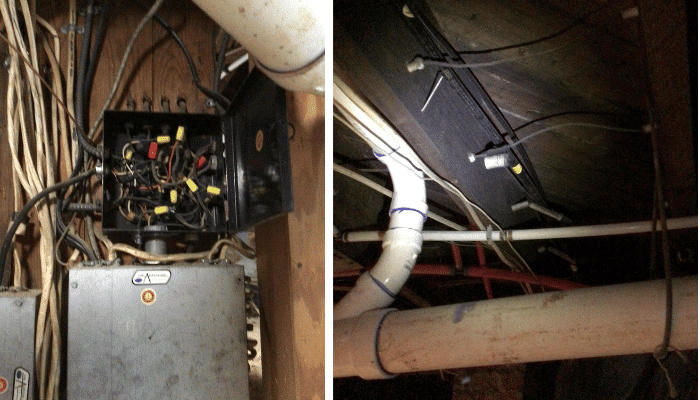
While knob-and-tube wiring was considered appropriate for the electrical demands of its time, these systems can present significant concerns in a modern home. Older wiring may not be equipped to handle today's electrical demands, and modifications made over the decades can create additional issues.
Our team understands the unique electrical needs of older homes and the importance of preserving their character while making sure their electrical systems are safe, reliable, and equipped for modern living.
If you live in an older home, Dawson's Electric and Air can help you assess your wiring, identify potential concerns, and determine whether updates or rewiring may be needed.
What's Knob-and-Tube Wiring?
Knob-and-tube (K&T) wiring was the standard electrical installation method in homes built between 1880 and 1940. It gets its name from its defining components: copper conductors protected by ceramic 'knobs' that secure the wire to the framing, and porcelain 'tubes' that safely guide the wire through studs and joists.
Unlike modern electrical systems, knob-and-tube wiring uses a two-wire system (hot and neutral) and lacks a third grounding wire, which is a critical safety feature in modern households. You will often find these systems in the historic homes we service throughout areas of historic downtown Raleigh and historic parts of Fuquay-Varina, such as Lincoln Heights.
Because this wiring relies on older insulation materials such as rubber or cloth, it requires an expert assessment to evaluate its condition and safety.
Can You Still Use Knob-and-Tube Wiring?
While knob-and-tube wiring can be functional in specific conditions, it is rarely recommended for modern power demands without a professional electrical inspection. The porcelain and copper components themselves are often durable, and many historic homes still utilize their original electrical grids.
However, the system's age and the absence of grounding mean that even a functional system requires a professional safety assessment before it can be considered safe for continued use.
Because the installation method secures wiring deep within the wall cavity away from surface framing, these wires are naturally less susceptible to accidental punctures from nails or screws. Despite this, the degradation of insulation materials over time poses a significant risk.
At Dawson's Electric and Air, we emphasize that homeowners should never assume an aging knob-and-tube system is safe; an expert evaluation is essential to determine the integrity of the system and its ability to support your home's electrical needs.
Why Does Knob-and-Tube Wiring Malfunction?
The primary safety concern with knob-and-tube (K&T) wiring is its lack of a grounding conductor. Modern electronics and appliances rely on a three-wire system to redirect excess current safely; without this, K&T systems pose a significant risk of electrical shock and equipment damage. Furthermore, these systems are not moisture-rated, making them particularly hazardous in high-humidity areas like kitchens, bathrooms, and basements.
Another critical risk involves thermal management. K&T wiring was engineered to dissipate heat into open wall cavities. When modern insulation is packed around these wires, it traps heat, which can lead to insulation breakdown and electrical fires. Professional standards generally prohibit covering active K&T wiring with thermal insulation for this reason.
Finally, the age of these systems often leads to physical degradation and hazardous "DIY" modifications. Decades of wear can cause cloth or rubber insulation to become brittle and flake away, leaving energized wires exposed. Compounding this, many historic systems have been improperly spliced into modern circuits by unqualified individuals, creating overloaded and unstable configurations.
An expert assessment is vital to identify these hidden vulnerabilities and ensure your home meets current safety standards.
Should You Replace Your Knob-and-Tube Wiring?
Deciding whether to replace knob-and-tube wiring depends on the condition of your system and your home's modern power needs. While some sections may remain functional in low-demand areas, any homeowner should prioritize replacement in areas with moisture, spaces slated for insulation, or rooms where you frequently use modern appliances.
We recently helped a family in a historic home near downtown Fuquay-Varina upgrade their outdated wiring. They were concerned about flickering lights whenever their kitchen appliances were running, a classic sign of an overloaded, aging system. By replacing their knob-and-tube with a modern, grounded electrical system, we not only ensured their home met current safety codes but gave them peace of mind for their next renovation.
How Can Dawson's Electric and Air Help?
At Dawson's Electric and Air, we specialize in the unique electrical needs of historic homes. We can perform a professional safety assessment to determine the integrity of your wiring and guide you on the best path forward, whether that's targeted repairs or a full system upgrade.
If you're ready to modernize your home's electrical infrastructure, contact Dawson's Electric and Air 919-887-8284 today to schedule your professional electrical safety inspection.
While functional in its time, knob-and-tube wiring generally poses significant safety risks for modern homes. It lacks a grounding wire required for modern appliances, and the older insulation materials can degrade over time, creating fire and shock hazards. Homeowners in older, historic neighborhoods, should have a professional assessment to evaluate their system's integrity.
Knob-and-tube wiring is identifiable by its namesake components: copper wires secured by ceramic knobs and run through porcelain tubes in wall studs and joists. If you suspect your home has this system, contact the experts at Dawson’s Electric and Air to conduct a professional electrical inspection.
Even if your system appears functional, it is rarely recommended for modern power demands without a professional safety assessment. Modern electronics require a grounded system, and the lack of grounding in knob-and-tube wiring poses risks. Additionally, covering this wiring with modern thermal insulation can cause it to overheat, leading to potential fire hazards.
Flickering lights are often a sign of an overloaded, aging electrical system. Because knob-and-tube wiring was not designed to handle the high energy demands of modern appliances, circuits can struggle to keep up, resulting in noticeable power instability. If you experience this in your historic home, it is time to schedule a safety evaluation with a local expert.
Dawson’s Electric and Air specializes in the unique electrical needs of historic residences. Our team provides expert safety assessments, targeted repairs, and full system upgrades to help bring your home up to current safety codes and ensure peace of mind for your family.