

First Time Turning On Heat? Triangle NC Homeowner Guide
If you live in the Raleigh, Durham, or greater Triangle area, you know how our fall weather works. It might be 80 degrees on a Tuesday and 45 degrees by Thursday night. When that first real chill hits Wake and Harnett counties, you finally walk over to your thermostat and switch it from “Cool” to “Heat.”
But a few minutes later, a smell fills your house. It might smell like burning dust, hot metal, or even singed hair.
First, take a deep breath. Maybe step outside if the smell is too strong! If your heater smells funny the first time you turn it on for the season, it is completely normal most of the time. However, there are a few specific odors that mean it is time to turn the system off and call the pros at Dawson’s for HVAC repair service in and around Raleigh.
As your local experts at Dawson’s Electric & Air, we’ve put together this guide to help you figure out exactly what that smell is, how long it should last, and when you should call for help based on our first-hand experience.
The Most Common Culprit: The Burning Dust Smell
The vast majority of the time, the smell coming from your vents is simply burning dust. We like to call this the Toaster Effect.
Think about a toaster that has been sitting in your kitchen cabinet for six months. If you plug it in and turn it on, it’s going to smell a little funny as the dust that settled on the heating elements burns off.
Your HVAC system does the exact same thing.
All spring and summer, while your air conditioner was keeping you cool, dust, pet dander, and our famous North Carolina pine pollen were circulating through your home. Even with a good air filter, a tiny layer of dust settles on your furnace’s heat exchanger or your heat pump’s electric heat strips. When those components get hot for the first time in months, that dust instantly burns up.
How long should the burning dust smell last?
This is the most common question we get. The burning dust smell should fade away within 30 to 60 minutes, though a faint odor might linger for a few hours.
Pro Tip: If the weather permits, crack a few windows before you turn your heat on for the first time this season. Let the system run for about an hour to clear the air.
Heat Pumps vs. Gas Furnaces – Why North Carolina Homes Are Unique
Here is something most heating guides won’t tell you: what you smell heavily depends on the type of system you have. In the Triangle area, heat pumps are incredibly common.
If you have a Gas Furnace: When a gas furnace turns on, the burners ignite, heating up a metal clamshell called a heat exchanger. The dust on the outside of this exchanger burns off. This is a quick process, and the smell usually vanishes rapidly.
If you have a Heat Pump: Heat pumps don’t use gas; they transfer heat from the outside air. However, when the temperature in Raleigh drops near freezing, your heat pump will activate its Auxiliary or Emergency Heat strips. These are essentially giant electric toaster coils inside your ductwork.
- The Mid-Winter Surprise: Because heat pumps don’t always use these electric strips during mild fall weather, you might not get that burning dust smell until January when the first hard freeze hits and those strips finally turn on! Don’t panic, it’s just the dust burning off the backup heat strips.
Other Weird Heater Smells and What They Mean
While burning dust is normal, your nose is your best alarm system for other HVAC issues. If you smell any of the following, pay close attention.
1. The Smell: Rotten Eggs or Sulfur
- The Culprit: A Natural Gas Leak
- What to Do: Natural gas is odorless, but utility companies add a chemical called mercaptan to make it smell like rotten eggs so you can detect a leak. This is an emergency. If you smell rotten eggs, turn off your heater, get your family and pets out of the house, and call your gas company or 911 immediately.
2. The Smell: Musty, Mildew, or Dirty Socks
- The Culprit: Mold or Bacteria in the System
- What to Do: In the HVAC industry, we call this Dirty Sock Syndrome. North Carolina summers are incredibly humid. Moisture can build up on your indoor AC coil over the summer, allowing a harmless but stinky bacteria to grow. When you turn on the heat, it blows that damp, locker-room smell into your house. Getting a professional duct cleaning, installing a UV air purifier, or scheduling a system cleaning with Dawson’s Electric will solve this.
3. The Smell: Burning Plastic or Electrical Wires
- The Culprit: Overheating Motor, Melting Wire, or a Foreign Object
- What to Do: Turn the system off. If it smells like a fish tank heater or melting plastic, an electrical component (like your blower motor) could be failing, or a child might have dropped a plastic toy down a floor vent. Continuing to run the system can cause severe electrical damage or a fire. Call Dawson’s Electric to have one of our technicians inspect the wiring.
4. The Smell: Chemical or Formaldehyde
- The Culprit: A Cracked Heat Exchanger
- What to Do: If you have a gas furnace and notice a sharp, chemical odor (sometimes causing headaches or nausea), shut it off immediately. This is a strong indicator of a cracked heat exchanger, which can leak deadly Carbon Monoxide (CO) into your home. Ensure your CO detectors are functioning properly and call an HVAC pro immediately.
Frequently Asked Questions
Will the heater smell set off my smoke detector?
Usually, no. The amount of dust burning off is so small it doesn’t create visible smoke. However, if your smoke detector is placed right next to a vent, a heavy burst of burned dust could trigger it. If you see actual smoke, turn the system off immediately.
Is it safe to breathe the burning dust smell?
Yes, for the average person, it is harmless. However, if you or a family member has severe asthma, allergies, or COPD, the burning dust might cause temporary throat irritation. It’s best to have sensitive family members step out to the porch for an hour while the smell clears.
Why does it smell like burning hair?
If you have cats or dogs, pet hair gets pulled into your return vents and trapped on the filter (and sometimes sneaks past it). Burning pet hair smells much worse than regular dust, but it is just as harmless and will fade just as quickly.
How to Prevent the First Use Heater Smell
You can’t completely stop dust from settling, but you can heavily reduce the smell with two simple steps:
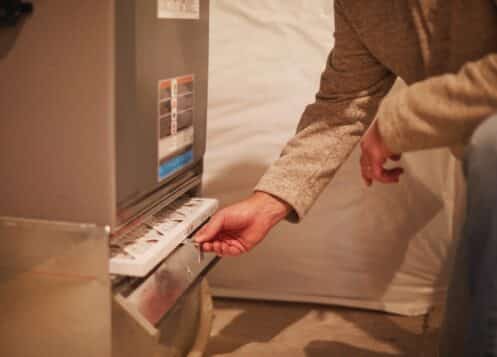
- Change Your Air Filter: Before you turn your heat on for the season, pull out your old summer filter and put in a fresh one. A clogged filter restricts airflow, which makes your furnace work harder, run hotter, and smell worse.
- Schedule a Fall Tune-Up: The absolute best way to ensure your heating system is safe, odor-free, and ready for winter is to schedule a routine maintenance visit.
Ready for a Cozy, Odor-Free Winter?
Whether you are dealing with a lingering bad smell, or you just want the peace of mind that your heating system is ready for the North Carolina winter, Dawson’s is here to help.
Dawson’s is proud to serve homeowners across Raleigh, Durham, Chapel Hill, Garner, Cary, Fuquay-Varina, and throughout Wake and Harnett counties. Wherever you call home in the area, you can count on our dedicated team for dependable, certified professional service tailored to your needs.
Don’t let a weird smell keep you in the cold!
Call 919-887-8284 to schedule your fall heating tune-up or electrical inspection or contact us online with any additional questions.