

If you live in the Triangle, you probably tense up a little every time the summer power bill lands. Between the Raleigh-Durham heat and our famous humidity, cooling costs can climb fast, and often more than you expected. The good news: a handful of practical changes you make now can keep those bills in check all season, and most of them don't require spending much at all.
Here are five steps that make a real difference, plus a sixth worth weighing if your system is getting up in years.
1. Upgrade to a smart thermostat
If your bills spike every summer, a smart thermostat is one of the easiest upgrades to justify. You can control it from an app whether you're at work, on vacation, or just on the couch, and many models send reminders for things like filter changes that keep your system running efficiently.
The most popular models — ecobee, Google Nest, and Honeywell Home — also tie into Amazon Alexa and Google Home for hands-free control. Beyond the convenience, there's money on the table: Duke Energy's smart thermostat program pays a $150 bill credit when you enroll a qualifying thermostat, plus a recurring annual credit. (It's called EnergyWise Home for Duke Energy Progress customers and Power Manager for Duke Energy Carolinas customers — both serve parts of the Triangle.) In exchange, you let Duke make brief, optional adjustments during peak-demand periods, and you can opt out of any event from your phone.
If you'd like a deeper look before you buy, our guide to the benefits of programmable thermostats breaks down what to look for. We can also handle the install and walk you through enrollment.
2. Seal doors, windows, and duct leaks
One of the cheapest ways to control a cooling bill is simply to stop the cool air from escaping. Even small gaps make your system work harder than it should during the worst of a Triangle July.
Start simple: close doors to unused rooms, and make sure windows are fully shut and sealed. Then check the spots that leak most — around doors and windows — and add weatherstripping or a bead of caulk where you feel a draft.
Don't overlook your ductwork. Leaky ducts let cooled air spill into attics and crawl spaces before it ever reaches your living room, which quietly drives up costs and wears out your system. Having ducts sealed and properly insulated makes sure the air you're paying to cool actually lands where you live. If you're not sure how tight your ducts are, it's one of the things we check during a tune-up.
3. Enroll in an HVAC maintenance plan
If you want lower bills and fewer surprise breakdowns, a regular maintenance plan is one of the smartest moves you can make. Rather than waiting for something to fail, your system gets professionally serviced on a set schedule — usually right before the peak cooling and heating seasons — so it never has to strain to keep up.
Routine service catches small issues before they become expensive repairs, reduces wear and tear, and helps the system last longer. There's a convenience payoff too: you don't have to remember to book anything, because your local HVAC team handles the scheduling for you.
Over a full season, a well-maintained system runs more efficiently, which shows up as lower monthly bills and far fewer emergency calls when the heat is at its worst.
4. Use ceiling fans the right way
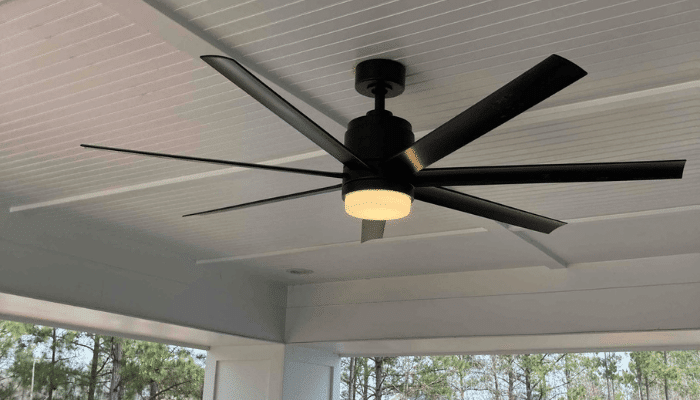
Ceiling fans can make a room feel noticeably cooler when you use them correctly. They don't actually lower the temperature — they move air, creating a wind-chill effect on your skin that lets you raise the thermostat a degree or two without feeling it.
For summer, set the fan to spin counterclockwise. That pushes cooler air down and circulates it through the room. And because fans cool people rather than spaces, turn them off when you leave — running one in an empty room just uses energy for nothing.
5. Consider an energy-efficient system upgrade
If your system is older or visibly struggling in the heat, an upgrade may be the move. Equipment loses efficiency as it ages, meaning it burns more energy to deliver the same comfort. Newer high-efficiency systems cool more effectively while using significantly less power, thanks to higher SEER ratings, better airflow, and smarter temperature control.
An upgrade isn't only about comfort — it can mean real long-term savings and fewer breakdowns during peak summer. Depending on the equipment and your household, you may also qualify for rebates or financing that make the project more affordable than expected:
- Energy Saver NC. For income-eligible households, this state program offers up to $8,000 toward a qualifying ENERGY STAR heat pump, with the amount tied to household income. Current details are on the official Energy Saver NC site.
- Duke Energy HVAC rebates. Duke offers rebates of up to $1,000 on qualifying heating and cooling upgrades, generally for ducted central equipment.
Rebate amounts, eligibility, and program availability change often — the links above go to the official program pages so you can confirm what's current. We're glad to tell you exactly what your project qualifies for.
As a rule of thumb, if your system is past the 10-to-15-year mark or needs frequent repairs, upgrading to an efficient model is usually a sound decision for both comfort and cost.
Stay ahead of your summer energy bills
Keeping cooling costs down doesn't take a major overhaul. A few smart adjustments — a smart thermostat, sealed leaks, a maintenance plan, efficient fan use, and an upgrade when the time is right — add up to real comfort without the budget shock. The key is being proactive: small changes now make the biggest difference once the heat sets in and your system is working hardest.
Want a local technician to take a look?
Whether it's routine maintenance, a thermostat install, or weighing a high-efficiency upgrade, we'll make sure your home is ready for a North Carolina summer. Call 919-887-8284 today, or reach out online with any questions.
Keep reading
- AC maintenance in Raleigh — keep your system efficient all summer
- Benefits of programmable thermostats — what to look for before you buy
- The truth about energy efficiency — lowering cooling costs in Raleigh