


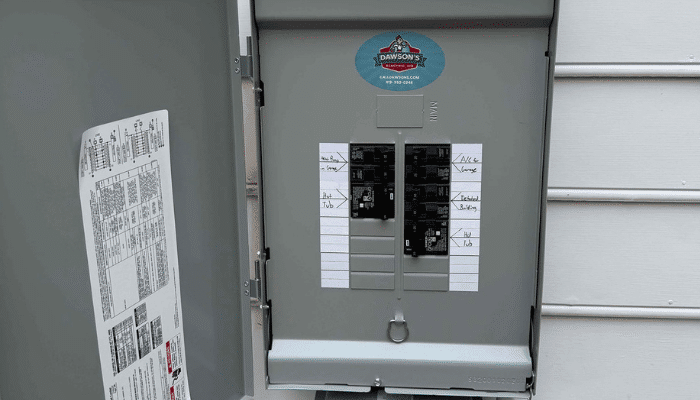
You may notice your breaker keeps tripping immediately after resetting, or that a specific appliance causes the breaker to flip off. In some cases, homeowners experience an electrical panel that keeps tripping repeatedly during normal use. While it can be frustrating when the power suddenly goes out in part of your home, a tripped breaker is actually doing its job by protecting your wiring, appliances, and family from potentially dangerous electrical problems.
Many homeowners in the Triangle and surrounding areas experience nuisance breaker trips, especially during the summer months when air conditioners, refrigerators, and other high-demand appliances are working harder.
In this guide, we'll explain the most common reasons a breaker keeps tripping, what you can safely check yourself, and when it's time to call your local, licensed electrician.
Quick Answer: Why Does My Breaker Keep Tripping?
A circuit breaker keeps tripping because the circuit is being overloaded, there is a short or ground fault, a faulty appliance, or a wiring or breaker issue. While a single trip is normal, repeated tripping usually indicates an underlying electrical problem that should be inspected by a licensed electrician.
A breaker that repeatedly trips after being reset is typically caused by one of seven issues:
- An overloaded circuit
- A short circuit
- A ground fault
- An arc fault
- A faulty appliance
- Damaged wiring
- A failing circuit breaker
These issues are also commonly searched as “breaker keeps flipping,” “breaker tripping repeatedly,” or “electrical panel keeps shutting off,” but they all point to the same underlying electrical safety problem.
Because these problems can create overheating, electrical shock hazards, or fire risks, repeated breaker trips should never be ignored.
What Does It Mean When a Circuit Breaker Trips?
Your electrical panel contains circuit breakers that monitor the amount of electricity flowing through your home's wiring. When a breaker detects an unsafe condition, it automatically shuts off power to prevent damage.
Think of a breaker as your home's electrical safety guard. Instead of allowing wires to overheat and potentially start a fire, the breaker cuts power before serious damage occurs.
While a single trip may not indicate a major issue, a breaker that continues tripping after being reset usually means an underlying electrical problem needs attention.
1. An Overloaded Circuit
Overloaded circuits are one of the most common causes of breaker trips.
An overload occurs when too many devices draw power from the same circuit at the same time. Modern homes use more electricity than ever before, and many older homes weren't designed for today's electrical demands.
This is especially common in homes where the breaker keeps tripping when multiple high-demand appliances are used at the same time, such as microwaves, space heaters, or portable air conditioners.
Common overload situations include:
- Space heaters
- Portable air conditioners
- Hair dryers
- Air fryers
- Microwaves
- Coffee makers
- Window AC units
- Multiple electronics on power strips
What You Can Check
Unplug some devices connected to the affected circuit and reset the breaker. If it stays on, an overload may be the cause or a faulty appliance.
If overloads happen frequently, you may need a dedicated circuit installed by a licensed electrician.
2. A Short Circuit
A short circuit occurs when a hot wire touches a neutral wire, a ground wire or another unintended conductor. This creates a sudden surge of electrical current that causes the breaker to trip immediately.
Short circuits are more serious than overloaded circuits and should be addressed as soon as possible.
Signs of a Short Circuit
- Breaker trips immediately after reset
- Burning odors
- Scorch marks on outlets
- Sparks from outlets or switches
- Buzzing sounds from electrical devices
A short circuit is often what homeowners describe when they say “my breaker trips instantly after I reset it.” If you notice any of these warning signs, stop using the affected circuit and contact an electrician.
3. A Ground Fault
Ground fault breakers could be installed in areas to help protect you from shock since water can be a conductive patch to ground.
These breakers are especially common in areas where moisture is present, including:
- Bathrooms
- Kitchens
- Laundry rooms
- Garages
- Outdoor outlets
Ground faults can create serious shock hazards, which is why GFCI protection is required in many areas of the home.
If your breaker trips whenever you use an outlet near water, a ground fault could be the culprit.
4. An Arc Fault Has Been Detected
Modern electrical systems often include AFCI (Arc Fault Circuit Interrupter) protection.
Arc faults occur when damaged wires, loose connections, or deteriorating insulation create electrical arcing. These arcs generate intense heat and are a leading cause of residential electrical fires.
An AFCI breaker is designed to detect these dangerous conditions and shut off power before a fire can start.
Common causes include:
- Loose wire connections
- Damaged cords
- Aging wiring
- Worn outlets
- Improper DIY electrical work
If an AFCI breaker repeatedly trips, it's important to have the circuit professionally inspected.
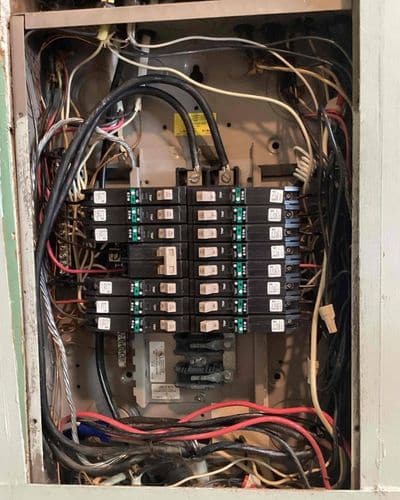
5. A Faulty Appliance Is Causing the Problem
Sometimes the issue isn't the electrical system at all, it's an appliance connected to the circuit.
As appliances age, internal electrical components can fail and create faults that trip the breaker.
Common offenders include:
- Refrigerators
- Freezers
- Dehumidifiers
- Vacuum Cleaners
- Treadmills
- Space heaters
In many cases, homeowners notice the breaker keeps tripping when a specific appliance turns on or cycles, which is a strong indicator the appliance, not the wiring, is the source of the issue.
How to Test for a Faulty Appliance
- Turn off the breaker.
- Unplug everything connected to the affected circuit.
- Reset the breaker.
- Plug devices back in one at a time.
If the breaker trips when a specific appliance is connected, that appliance may need repair or replacement.
6. Damaged Wiring Behind Walls
Hidden wiring problems can be difficult to detect without professional testing.
Over time, wiring may become damaged due to:
- Rodents chewing wires
- Home renovations
- Nails or screws penetrating wiring
- Aging insulation
- Moisture intrusion
- Improper installations
Because these issues are often concealed behind walls, homeowners may only notice symptoms such as recurring breaker trips, flickering lights, or intermittent power loss.
Damaged wiring should always be evaluated by a licensed electrician.
7. The Circuit Breaker Itself May Be Failing
Although circuit breakers are designed to last for many years, they don't last forever.
A breaker may become worn or damaged due to:
- Age
- Repeated trips
- Loose electrical connections
- Corrosion
- Electrical surges
A failing breaker may trip unexpectedly even when the circuit isn't overloaded.
If your electrician determines the breaker itself is defective, replacement is typically a straightforward repair.
When to Call a Licensed Electrician for a Breaker That Keeps Tripping
While some breaker trips are caused by simple overloads, repeated or unexplained tripping is often a sign of a deeper electrical issue that requires professional diagnosis.
You should contact a licensed electrician if:
- Your breaker keeps tripping immediately after resetting
- The same circuit trips repeatedly with no clear cause
- You notice burning smells, buzzing, or warm outlets
- Lights flicker when appliances turn on
- The breaker trips even when few or no devices are plugged in
- You’ve tried unplugging appliances and the issue continues
These symptoms can point to serious concerns such as short circuits, ground faults, damaged wiring, or a failing electrical panel. Left unaddressed, these issues can increase the risk of electrical fires or damage to your home’s electrical system.
A licensed electrician can safely test the circuit, identify the root cause, and recommend the right repair, whether that’s a dedicated circuit, wiring repair, appliance replacement, or breaker panel service.
A Recent Breaker Tripping Problem We Solved in Fuquay-Varina
Recently, our team was called to a home in Fuquay-Varina where the homeowner experienced repeated breaker trips in their garage.
The homeowner initially believed the breaker had gone bad. During our inspection, we discovered a refrigerator and deep freezer had been added to a circuit that was already serving several garage outlets.
The circuit was overloaded whenever both appliances cycled on simultaneously.
We installed a dedicated circuit for the appliances, eliminating the nuisance trips and providing safer, more reliable power.
Situations like this are common throughout the Triangle as homeowners add new appliances and electronics without realizing the impact on their electrical system.
Final Thoughts: Don’t Ignore a Breaker That Keeps Tripping
A circuit breaker that trips occasionally is doing its job, but when it keeps happening, it’s usually a sign of an underlying electrical issue that shouldn’t be ignored. Whether the cause is an overloaded circuit, a faulty appliance, or a more serious wiring or panel problem, repeated trips are your home’s way of signaling that something isn’t right.
While some basic troubleshooting can help identify simple overloads, many breaker issues require professional testing to ensure your electrical system is safe, up to code, and capable of handling your home’s power demands.
If your breaker keeps tripping our licensed electricians at Dawson’s Electric & Air can diagnose the issue quickly and recommend the safest, most cost-effective solution.
From dedicated circuit installations to electrical panel repairs and whole-home safety evaluations, we’re here to keep your home powered safely and reliably.
Contact Dawson’s Electric & Air at 919-887-8284 or contact us online.
Frequently Asked Questions About Tripped Breakers
A single trip is often just a nuisance, like plugging in too many high-demand appliances at once. It is generally safe to reset the breaker once. However, if the breaker trips again immediately or refuses to stay in the “on” position, stop trying to reset it. Repeatedly flipping a breaker that is trying to protect your home can cause internal damage or electrical fires.
If a breaker won’t stay reset, it usually indicates an underlying electrical fault rather than a simple overload. Common causes include a short circuit, ground fault, arc fault, or a failing breaker. Because these issues can pose fire or shock hazards, they should be diagnosed by a licensed electrician.
You should treat a tripped breaker as a priority service call if you notice any of the following:
- The main breaker for your entire home has tripped and will not reset (resulting in a total power loss).
- You smell burning, hear buzzing or popping sounds near the panel, or see scorch marks on outlets.
- The breaker trips repeatedly with no clear cause or no devices plugged in.
To help our team provide faster service, it is helpful if you can identify the following:
- The age of your home: This helps us understand the likely age and condition of your system so that we can send the right technician out.
- The specific area affected: Is it an entire room, a specific appliance, or the whole house?2
- Prior events: Did anything change or were any new appliances plugged in right before the power went out?
We send a technician out to do an initial inspection where he takes a look at the panel and the problem you are having. If a further diagnostic is needed he gives upfront pricing that ranges from $225 up to $800.00 depending on the complexity of the circuit, age or type of wiring. Upon your approval we proceed to break down the circuit step by step using meters and speciality equipment to find the issue. We then either do a repair or provide options for a more permanent solution.